

By: Lightbearer
THE EGBAS

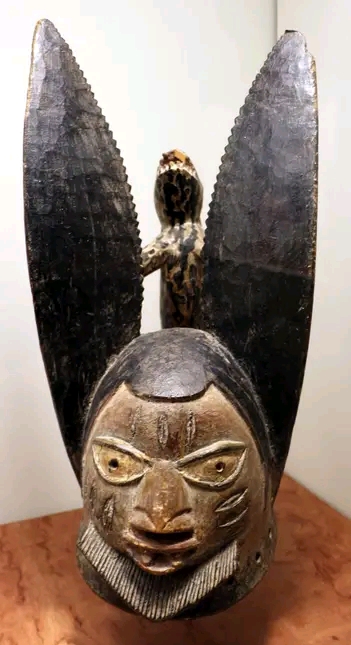
The Egbas are a small offshoot of the Yorubas Proper, who occupy the southeastern districts of that province.They origin-ally occupied the area bounded by certain imaginary lines drawn,say, from Ijaye to meet the Ogun River at Olokemeji, and along it to its mouth, and another from the same point via Ibadan to the west of Ijebu Remo down to the coast. They lived in hamlets and villages for the most part independently of one another, and never under one rule. All the principal families of the Egbas trace their origin from , hence the common saying ” Egbas who have not their root in Oyo are slaves,” i.e., belong to the conquered aboriginal population. Most of the chiefs sprang from the Esos of OYO. It would seem then that during the wars of conquest, a number of these warlike Esos, under the leadership of the King’s half-brother, was detached from the main army, carrying their arms to those regions where they subsequently settled, in the immediate neighborhood of the Owus. Abeokuta, as we now know it, of course had no existence then. Each of what is now called the ‘ townships “
was a separate village or hamlet with its own
chief; they were loosely grouped into three divisions, but rather independent of one another, but all acknowledging the King’s brother (the Alake) as their PRIMUS: They were:
I.Egba Agbeyin. These were the Egbas proper, and nearestthe Ijebu Remps. The principal towns were: Ake, the chief town,Ijeun, Kemta, Iporo, Igbore, etc.
2.Egba Oke Ona, i.e., those situated near the banks of the River Odo Ona.Okò the chief town, Ikereku, Ikija, Idomapa, Odo, Podo, etc. Their chief is called the Osile.
- Egba Agura or Gbagura : these were situated near the OyO districts, and indeed they contain genuine Oyos in large numbers, and generally they partake of their characteristics largely, hence they are nick named “OYO among Egbas.”The principal towns
were: Agura the chief, Ilugun, Ibadan, Ifaye, Ika, OJO , Ilawo etc.
The Egbas were on the whole few in number, and occupied a limited territory; this can very well be proved by the fact, that after a period of more than half a century, they have been compelled by stress of circumstances to live together within one wall, and in spite of large accessions from other tribes, they still form but a single large town. Situated, as they were then, far from the centre of life and activity, they were little thought of. They had no separate king because all the principal chiefs and distinguished personages were office bearers of the ALÂFIN, hence. the common saying,.” Egba kò l’olu, gbogbo won ni nse bi Oba”(Egbas have no King, they are all of them like masters)'”‘ Olu wà” l’Oyo (The King is at oyo). It may be noted, that every child born to a reigning Alake must have an Oyo facial mark ; and that is so to this day.In early times the Alake ranks among the junior members of the Royal Family; for that reason there has never been a distinct royal family among the Egbas. The chief rulers in each division were usually elected (by divination) from any one of the 153 townships ; an Ikija man for instance has been” king’ ot Itesi, an Ijeun man an Alake, etc., as we shall see in the Appendix. In this respect also the Gbaguras differ from the others.In later times, at Abeokuta, one Jibode, a wealthy trader and traveller, who vainly endeavoured to obtain the Primacy of Ake,left children and grandchildren who eventually attained the coveted position, which was a singular instance of more than one member of a family becoming an Alake, but then they were all born in different townships.The Osile is said to be an unfortunate title becäuse, more than any of the other divisions, the Oke Ona people were more prone to slaughter human victims ; everytime the Osile entered the Ogboni house, he must walk on the blood of a male victim, and when he comes out on that of a female ! Also that Osiles never die a natural death; when their excesses became unbearable they were usually stoned to death; hence the appellation of their chief town,” Okò” i.e., a pelting stone. For that reason the Egbas were reluctant to resuscitate the title at Abeokuta until Governor McCallum of Lagos in 1897 on the occasion of the Queen’s Diamond Jubilee ordered the Egbas and others to reorganise their government, and fill up vacant titles. Since the destruction of the City of Owu (as we shall see below) and the unification of the Egba villages, the Owus have domiciled amongst them. Hence the so-called FOUR UNITED KINGS OF THE EGBAS: although Owu is not Egbä.
Copied from Facebook
 Press Council The Oke-Ogun Polytechnic,Saki (TOPS)